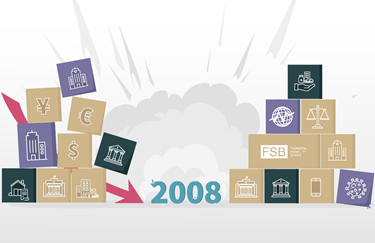
This online course explores the core principles behind financial regulation and guides learners to evaluate how well post-2008 reforms addressed systemic failures exposed during the Global Financial Crisis, including ensuring private sector compliance. It then applies these lessons to today's challenges, examining regulatory approaches to Fintech innovation, the response to the Covid-19 pandemic, and more recent financial pressures.
The objectives of this course are to:
- Identify the goals of financial regulation and understand the conditions under which regulation makes the financial system safer and more efficient, and when it can be counterproductive.
- Identify the precursors and vulnerabilities that give rise to financial crises, including historical contexts, technological developments, and private sector responses to previous regulation.
- Understand the main tools currently in use to mitigate stand-alone risks in individual financial institutions, as well as stability risks to the financial system as a whole, and evaluate their effectiveness, noting unintended consequences.
- Apply the basic rationales and goals for regulating technological financial innovations (e.g., fintech), and how post-2008 reforms influenced the regulatory response to the COVID pandemic and more recent financial risks.
----
Endorsements:
“Understanding how financial regulation evolved following the Global Financial Crisis of 2008, and how it shaped the financial industry, is vital for regulators and for the financial practitioners they regulate. This course provides the underpinnings for a critical assessment, challenging us to think through how regulation needs to adapt to today’s challenges.”
– Dr. Ben Bernanke, former chair of the Federal Reserve
---
This course proves that an online course can be even better than a course delivered in person. Laura Kodres' videos are brief, on point, and engaging. She is the ultimate expert on the theory and practice of financial regulation. You feel like you have access to a personal tutor, who appears whenever you want her to. – Zvi Bodie, Professor Emeritus at Boston University
– Zvi Bodie, Professor Emeritus at Boston University
---
"I took the course in a traditional classroom setting and found it really useful and intellectually stimulating. I recommend this course not only for regulators/policymakers but also for those who, in financial institutions, have to live with and have constructive dialogue with them to produce a more effective regulatory framework."
– Kazuki Tsuchiya – MIT Sloan MBA 2020 / Working for Mitsubishi UFJ Financial Group in global business development